

Your Team Doesn't Need You to Have All the Answers. They Need You to Stop Giving Them the Answers.
According to HBR, leaders spend almost half their time on work that could be delegated to someone else. That time could be spent coaching your team or on other strategic work.

Welcome to Reframed by Ashley Rudolph. One idea, every week, that changes how you see your career.
Last week was awesome.
I wrote about how to be confident even when you’re not feeling like the most confident version of yourself.
I hosted the first Reframed Insiders call. I won’t share details here but I will say that I left the call really impressed with how generous everyone was with their ideas, their advice, and their experiences. I can’t wait for the next one.
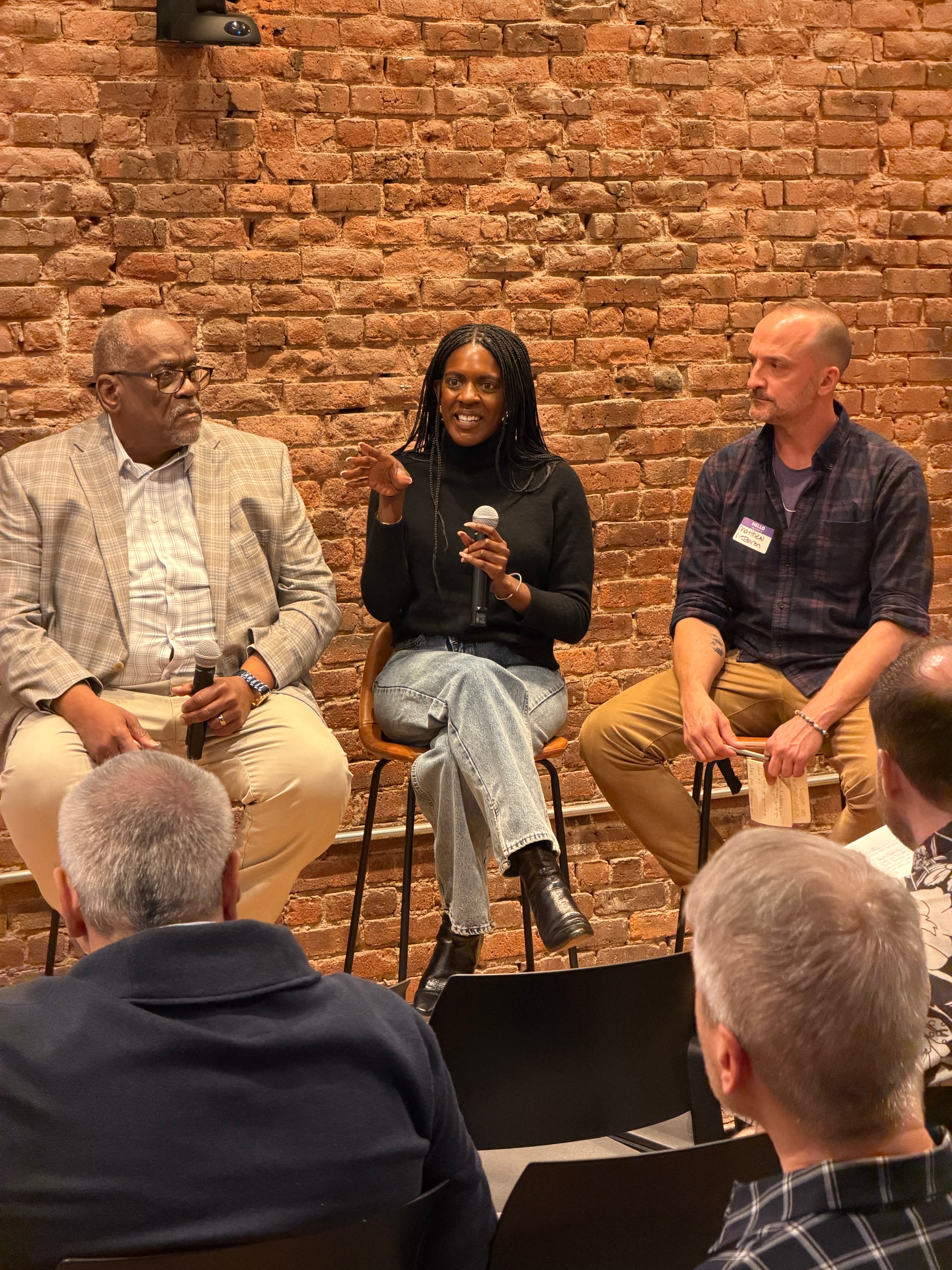
I spoke on a panel about navigating career transitions in tech, what to do, the current jobs landscape, and what the biggest differentiator is for talent.
I attended a trust voices breakfast hosted by Blomma, an AI coaching platform that launched last week. We talked about the future of work and why community and soft skills are more important than ever. Today’s newsletter is sponsored by Blomma.

What do you do when your calendar is packed but everyone still needs more from you?
When you get promoted, a sneaky little thing happens. You suddenly realize that your success no longer hinges on your ability to do YOUR job, your job is now to make other people better at theirs. But the reality most managers are living looks more like this:
Your team brings you problems they should be solving themselves.
Your bosses keep adding to your plate.
Your Slack messages keep piling up and they’re filled of more questions, requests, and non-urgent issues masquerading as emergencies.
Somewhere in between all of that, you’re supposed to find time to actually coach people through their growth.
This cycle perpetuates itself because when you’re the one solving everything, your team never learns to solve things without you.
I see this constantly with the leaders I coach.
One c-level client recently came to me completely underwater not because she was bad at her job, but because everything defaulted to her. Her team had no clarity on who owned what, so every question, every decision, every problem landed in her inbox.
She was the bottleneck. And she didn’t even realize it was happening.
Many of you probably feel this way or have felt this way at one point or another in your career. The demands of “Swiss Army Knife Leadership” mean that you have to flex across functions, switch hats constantly, and carry a wider load than ever. Every single leader right now is constantly doing more with less. Full stop.
You’re expected to be at least five different things simultaneously:
A reporting and metrics wizard
A people manager, coach, and task executor
A financial forecaster and planner
A macro-trend interpreter
A crisis manager
And sometimes all of that happens in the same meeting.
It’s a challenging time to be in leadership. Since this topic comes up quite a bit with my clients, I wanted to share some of the things that are helping them create capacity when they’re working with very limited time.
INSIGHTS
3 Strategies To Grow Your Team and Free Up Your Time
The fix isn’t working harder or finding extra hours that don’t exist in your schedule. The leaders I coach don’t have basic “time management” problems btw. Their problems are much more nuanced than that. It’s part responsibility, part unclear ownership across the team, and part behavioral defaults that got them to where they are but don’t serve them at this level. Here are the things that actually moved the needle and got them operating at the right level:
1. Provide role clarity and transfer authority.
The single biggest unlock for one of my recent clients was building clear documentation on every single team members’ roles, her expectations of them, and their commitments; making it crystal clear who was responsible for what. Once everyone knew what they owned, work stopped defaulting to her automatically. She could delegate and simultaneously manage expectations up, down, and across the organization.
If you want to try this: start with a RACI matrix, a simple responsibility framework that maps who is Responsible, Accountable, Consulted, and Informed for each function or project. I built one you can use as a starting point → My RACI Template
And if delegation is something you’ve always struggled to let go of without things falling apart, this HBR episode is worth ~20 minutes → The Essentials: Delegating Effectively. I’ve also covered delegating here on Reframed.
2. Raise the bar on what your team brings to you.
If your team shows up to 1:1s with chaos (aka their problems, status updates that could’ve been an email, and seeking answers to basic questions covered in existing documentation) you’ll spend critical 1:1 time triaging instead of coaching. Set a new bar. Teach them to come prepared with the following: here’s the situation, here’s what I’ve already tried, here’s what I’m thinking. One small structural change like this can completely transform the quality of the conversations you have with your team — you can direct that energy to strategy.
3. Instead of saying no, try a strategic redirect.
If you have a hard time saying no to people’s requests, hearing someone tell you to protect your time by “just saying no” isn’t helpful. You have to find a phrase that makes saying no easy for you. Easy = it makes you feel less bad than outright saying no (lol).
Replace “I’ll handle/do it” with:
“Here’s what we should do”
“Let me check with my team”
“Let me look at my calendar and get back to you”
“I don’t have the capacity to take that on this quarter, but check back in with me next quarter”
All of these responses reposition you as a strategic leader and a good model for your team.
High achievers default to “I’ll just handle it” because it’s faster and easier in the moment. But every time you absorb work that belongs to someone else, you rob them of the chance to grow and you keep yourself stuck.
The client I mentioned at the top? She now has documented roles her team is held to, coaching conversations instead of triage sessions in her 1:1s, and a way of redirecting work upward that her bosses actually respect. She was worried they'd all push back. They didn't. They respected her decisions and recommendations. Clarity creates trust. And trust creates influence.
THIS WEEK’S REFRAMED SPONSORED BY BLOMMA
You might be thinking why the heck is Reframed sponsored by an AI company? Is Ashley pulling a Reese Witherspoon/Mel Robbins on us?! No, I’m not. I believe relationships are still what make you hireable, promotable, and retainable. I also believe that executive-level support shouldn’t just be reserved for executives, that’s why I write Reframed each week. I like the team at Blomma because they believe these things too, they just happen to be using AI to tackle the problem of scaling exec support to more employees. If you’re curious about it, use the code ASHLEY to try it.
CLOSING THOUGHTS
Last week was a lot. I had a panel to prep for, a newsletter to write, our first Insiders call, five coaching sessions, and a breakfast downtown for the Blomma launch. That doesn’t even include all my other meetings and the 6 hours I spent getting my hair braided on Monday (lol). There were moments where I genuinely wasn’t sure I’d have enough time to do any of it well.
But I carved out 90 minutes to get downtown for the breakfast, rushed back for a coaching call, and showed up fully for both. The panel happened. The newsletter got written. The Insiders call was one of my favorite hours of the week.
None of it happened because I found extra time. It happened because I got intentional about the time I had.
Sometimes you’re not going to find more hours but when you start thinking about how to reinvest the time you do have, you’ll be surprised what you can actually fit in. An hour that’s more productive because you raised the bar for your team is an hour better spent. The 1 min it takes to respond with “let me check with my team” instead of “I’ll handle it” is 1 min better invested and additional time you don’t have to spend doing the thing you would have committed to otherwise. It’s how you set yourself and your team up to win.
What's one thing sitting in your inbox right now that should be passed along to someone on your team?
Good luck! See you next week.
Ashley
I’m an executive coach that supports high achieving Directors, VP, and C-level executives with career strategy. You can also hire me to facilitate workshops.
Subscribe to Reframed Insiders.

Reframed Insiders is a paid membership where you get direct access to me through: monthly live group coaching calls and if you can’t attend the calls, you’ll have access to a video library with all of them + my summaries and insights :)
It’s $35/mo or $250/year.
I went pretty deep through your articles, and I can already envision implementing role clarity and raising the bar on what the team brings to attention. On a Saturday afternoon to boot, which is pretty much when I have the brain space to process original thought.