


Welcome to Reframed! Work is complex, career advice shouldn’t be.
I’m Ashley Rudolph and I write this newsletter for ambitious people who are ready for the next level in their careers. People have said that I share the kind of “real talk” advice that you only get from a close friend. I agree.
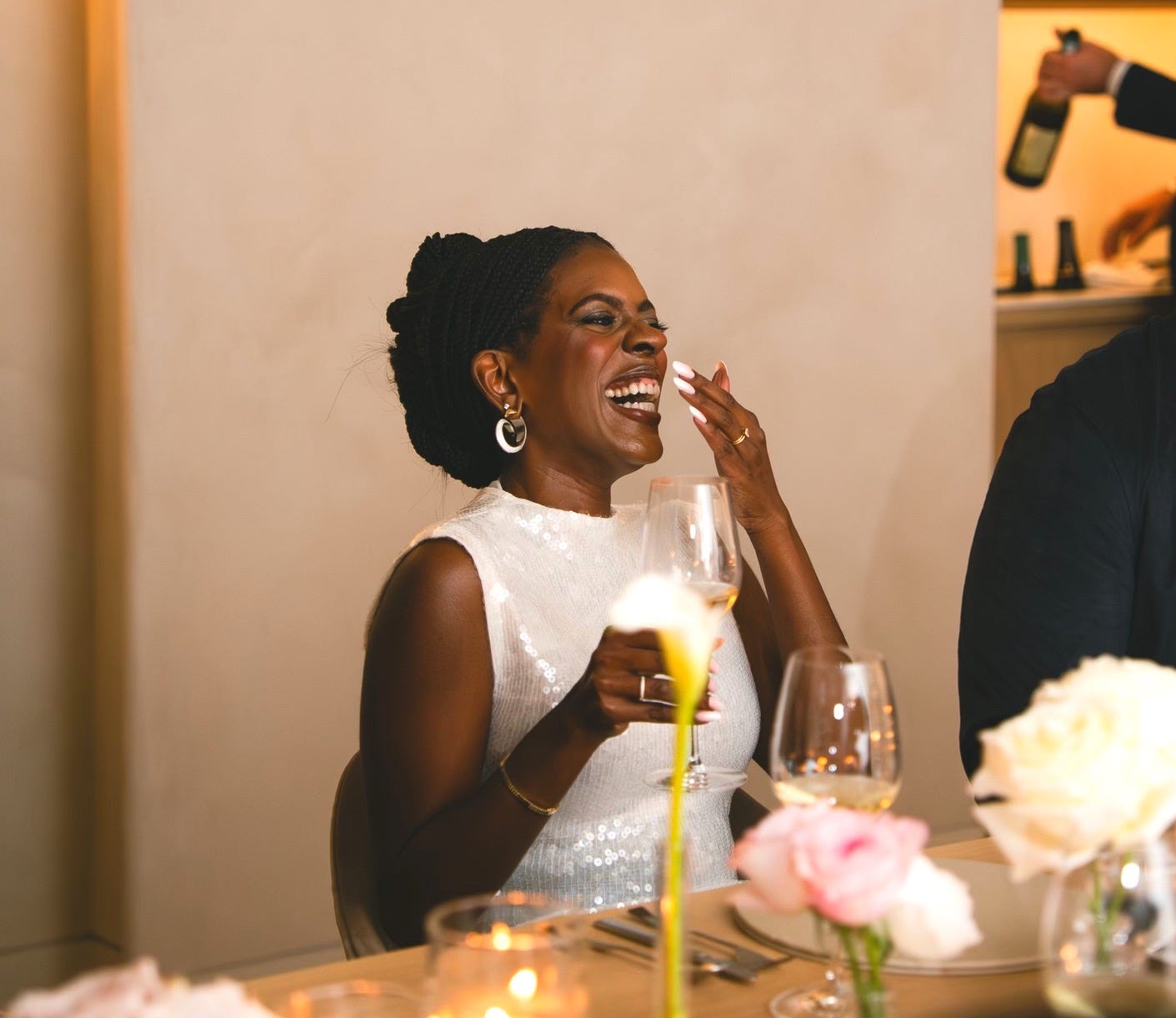
Today, I’m celebrating 100 (!!) issues of Reframed.
When I started this newsletter, it was an experiment. I had just launched my coaching business and was figuring out how to navigate entrepreneurship on my own.
I wanted to build a community of people who shared my values. People who weren’t afraid to admit they cared about their work and wanted to be great at what they do. So I built it.
And I didn’t just build a great newsletter, it translated into real results for my business. This year was about the three things I write about the most: doing great work, being visible, and telling compelling stories.
I’m sorry to report that this approach is, in fact, effective (lol).
So today, I’m pulling back the curtain and sharing what worked for me this year. Because results like these don’t happen by chance. This year, I:
Grew my business revenue by 50%
Grew my newsletter subscribers by 1,600% (for context my ‘25 target was just 200 subs lol)
Was featured on 15+ podcasts
Was featured in Teen Vogue (twice) for my expertise on the job market
Launched an entirely new website that became a conversion engine
Relaunched this newsletter as Reframed
Introduced Open Tabs, where I share my takes on the culture of work
And 2026 is going to be bigger.
STRATEGIES & INSIGHTS THAT WORK
Here’s everything I did to level up this year
On doing great work
I started my coaching business after 15 years climbing the corporate ladder. I’ve always been ambitious. I’ve been a high achiever since grade school, it even landed me on the Today Show when I was 17.
I applied the same frameworks I used to scale corporate operations function to grow my business. I can trace my growth back to a few specific, strategic choices. They were the areas I focused on consistently. They’re applicable whether you’re running your own business or focused on getting to the next level in your career.
Becoming customer obsessed. I smile every time someone tells me a newsletter felt like I was inside their brain. It’s because I coach high achievers. My friends are high achievers. I read what they read. I’m in the ecosystem. Most people view their careers through the lens of what they want, but real progress comes from centering the people you serve. It’s the difference between trying to convince someone they need you and providing the solution they were already looking for. It’s the shift from being a “nice-to-have” to a “must-have.” Going into 2025, I ran a detailed strategic planning exercise and brand retrospective, analyzing every single testimonial and piece of feedback I’ve ever received. Those insights became the backbone of my business strategy. It’s 33 pages long. I went DEEP. My advice? Center your customers, your stakeholders, or even your manager’s needs, and I promise you’ll feel the difference. (If you haven’t done ICP work, this piece in Forbes is aligned with my thinking on this topic.)
Focusing relentlessly on outcomes, not effort. This year, I got rid of low-ROI activities, busywork, and getting distracted by what others were doing. Instead, I focused on outcomes. That meant prioritizing sending a weekly newsletter because it led to opportunities. In my coaching, focusing on delivering results for my clients turned them into a referral engine. One client alone has referred SEVEN people. In a job, it works the same way. Your manager, colleagues, and stakeholders become the ones who connect you to opportunities…but only when you do great work.
Getting your hands dirty. One of the biggest differences I see between average managers and great ones is this: great managers don’t just design strategy, they execute. They stay close to the work. They understand how their decisions will actually impact their teams and the business because they’re in it. I hated the idea of becoming an “armchair expert”, so I became a player/coach. I’ve been embedded in one of my client’s businesses one day a week for the past 1.5 years as a fractional leader. I’m in leadership meetings. I run 1:1s. I help shape their people strategy in real time. That proximity matters. It’s the reason why my coaching is effective. My own version of dogfooding.
Pushing past discomfort. Talking about yourself and your work is hard. When I talk about “committing to writing every week” in the next section I know it will sound like an oversimplification. It’s not. There were plenty of weeks when I felt a real tinge of embarrassment before pressing send on this newsletter. But on the other side of that discomfort was always someone telling me that something I shared mattered to them. You’re going to encounter challenges in your work when you take on new roles or new projects. You might feel like giving up—don’t. Don’t let your own high standards hold you hostage.
Great work travels, especially when people know you exist (*wink*).
How to work with me
If you want to make 2026 the best year of your career, let’s chat. I help my clients do all the things I’m writing about today: doing great work, crafting the right stories about their work, and getting noticed by the right people.
On being visible
Great work creates momentum. When you amplify your work by talking about it, you’ll keep your career flywheel moving. Focusing on visibility is what moved me from the individual contributor lane into management and then from management into the executive level. Focusing on visibility is not political. It’s not distraction from “doing actual work”. It’s practical. Talking about your work and building relationships are critical if you want to move up and avoid stagnation. Creating visibility wasn’t instinctive for me as a professional. Once I treated it like a skill instead of a personality trait that I lacked, everything changed. Here’s what I focused on:
Working through personal limiting beliefs. Whenever I talk about speaking up or sharing ideas at work, someone inevitably says they can’t because they’re an introvert. That’s when I pull out my favorite party trick. I tell them Oprah’s an introvert and the conversation takes a turn. You can be introverted and still speak up in meetings, go to events, and talk to people you don’t know (Susan Cain wrote an incredible bestseller about introverts btw). The cost of not talking about yourself (or your work) are real:
Only 24% of women feel comfortable talking about their accomplishments at work (PRSA).
84% of women feel uncomfortable talking about their professional or academic achievements (US News & World Report)
Even when self-promotion directly impacts pay & promotions, women still downplay their achievements (Harvard Gazette)
Finding helpful frameworks. One of the most actionable books I’ve read on evangelizing your work is Share Your Work by Austin Kleon. It’s a quick read. If you’re good at what you do, but not great at sharing your work, buy it and keep it on your desk. I promise it will accelerate your career. Also, many of you have reached out to me about two of my newsletters on this topic that were particularly helpful. Here they are: 15 easy phrases to say in meetings and 10 non-cringey ways to self-promote.
Finding the right arenas. For some of you, that might mean presenting regularly in meetings, posting on LinkedIn or Substack, or being quoted in a trade publication. For me, that arena was podcasting (in addition to this newsletter). At the start of the year, I’d been on a guest 3 podcasts. Melissa Kwan: ‘your founder next door’ is the reason I was a featured guest on 15 (!!) podcasts this year. I followed her advice in this newsletter to a T.
Running high quality experiments. My customer obsession helped me decide which experiments were worth trying. I tried clarity calls to see if I could deliver real value to my subscribers in 15 minutes (I did!). I facilitated single topic workshops in communities (and got incredible feedback!). Both of those experiments landed me real clients, which means that these calculated risks (when centered around delivering value) paid off.
Here’s some inspiration → one of my favorite pieces of content is Babba Rivera sharing all the unhinged things she did to get Ceremonia off the ground. We also spoke to her about the evolution of her career this year on The Impactful Conversations Effect podcast.
Visibility is important but it’s only a career accelerant if you tell great stories.
On telling compelling stories
This year, I caught myself downplaying my own accomplishments at times in conversations, especially at events. It sounded like, “Oh, I’m an executive coach,” or “I work with high achievers,” or “I run my own business.” All technically true. All completely flat.
I help people craft their stories in my coaching and I was out here dimming my own light! So I decided to make the shift from quietly observing on the sidelines to sitting on panels, guesting on podcasts, and openly sharing my perspective instead of keeping it to myself. Here’s how I improved my storytelling:
Becoming a good written communicator — consistently. I used to “try to sound smart” by writing like a textbook. One of the best investments I made this year was taking 5–6 workshops with Writing Workshops. They helped me focus on telling real stories like crying at work, how I dealt with tough feedback, and the things I wished I had learned earlier in my career. Those became my most popular posts this year. Proof that good writing matters.
Becoming good at formulating opinions. Ten years ago, workers used to spend 20% of their time researching and gathering information. Now information is cheap in the age of AI. Developing the ability to craft real insights is not. It’s why companies are scrambling to hire storytellers. Being interesting, well read, and informed is a differentiator. It’s why I write Open Tabs! In your day to day, formulating opinions may look like sending a weekly recap email or sharing more of your own POVs in Slack.
Here’s an example → anyone can ask an AI tool “what is affiliate marketing?” But what people actually care about is how someone with real experience in affiliate marketing got good at it. It’s why this piece from Ali Kriegsman is resonating.
How you present is also part of your story. When I felt my best this year, I was put together. I focus a lot on intelligence and communication here but your appearance is a critical part of demonstrating gravitas in professional spaces. It’s so relevant that etiquette schools for founders are trending in tech. One of the modules is styling tips for work outfits lol.
If fashion and style is a focus area for you, some of my favorite voices on Substack are: Cassie Thorpe, inside the fashionverse , Rucheka's Substack, Magasin, Why You Should Care, Charles Royle, The Tribeca Stylist, ART DIRECTION, Grace Van Vranken, How Not to F*ck Up Your Face
Falling in love with new scents changed my life this year. There must be a scientific reason for the impact it had on my confidence lol. My new faves are: Acne Studios for Frederic Malle, Celine ZouZou, and Portrait of a Lady
CLOSING THOUGHTS
I shared all this to highlight the fact that none of this was magic. I got here by committing to the right plan and executing on it, one decision at a time.
Careers work the same way.
Some years, you’ll feel stuck and spend most of your energy trying to get unstuck.
In others, you’ll experience incredible growth and wonder how you’ll ever top it.
And then there are years where you can feel something big on the horizon. Where you just know it’s going to be your best one yet.
At the center of all of it is you.
You already have the skills. Now it’s time to take action. If you want a partner to help you plan and execute the best year of your career, here’s how to work with me.
I’m in California for the holidays and taking a break from the newsletter until the new year. It’s time for me to do what I often encourage others to do: slow down, reflect, and unplug. I’m turning 40 (!!) next year, so I need to rest up lol.
Thank you for reading. See you in 2026!
Ashley
Subscribe to Reframed.
Not subscribed yet? I share fresh leadership and career insights every Monday at 8AM, right before you tackle your week.
If you’re curious, people who work at the following companies subscribe to Reframed. Join them.
Thank u! Also
Hoping to be more opinionated in 2026
Just finished reading “show your work”. That book is a game changer. Thank you go the recommendation