

You Don’t Need a Career Plan. You Need to Trust Yourself.
What it looks like to navigate four career changes: from a world touring girl band to leading brand and comms in AI, her outlook on the industry, and what to do if you feel left behind.

Welcome to Reframed by Ashley Rudolph. One idea, every week, that changes how you see your career.
Last week, I wrote a Q&A where I answered common questions that readers and clients alike has asked me recently. If you’re wanting to know what it takes to be a VP, how to stop defaulting to accepting work, and how to reinvent yourself in your job search.
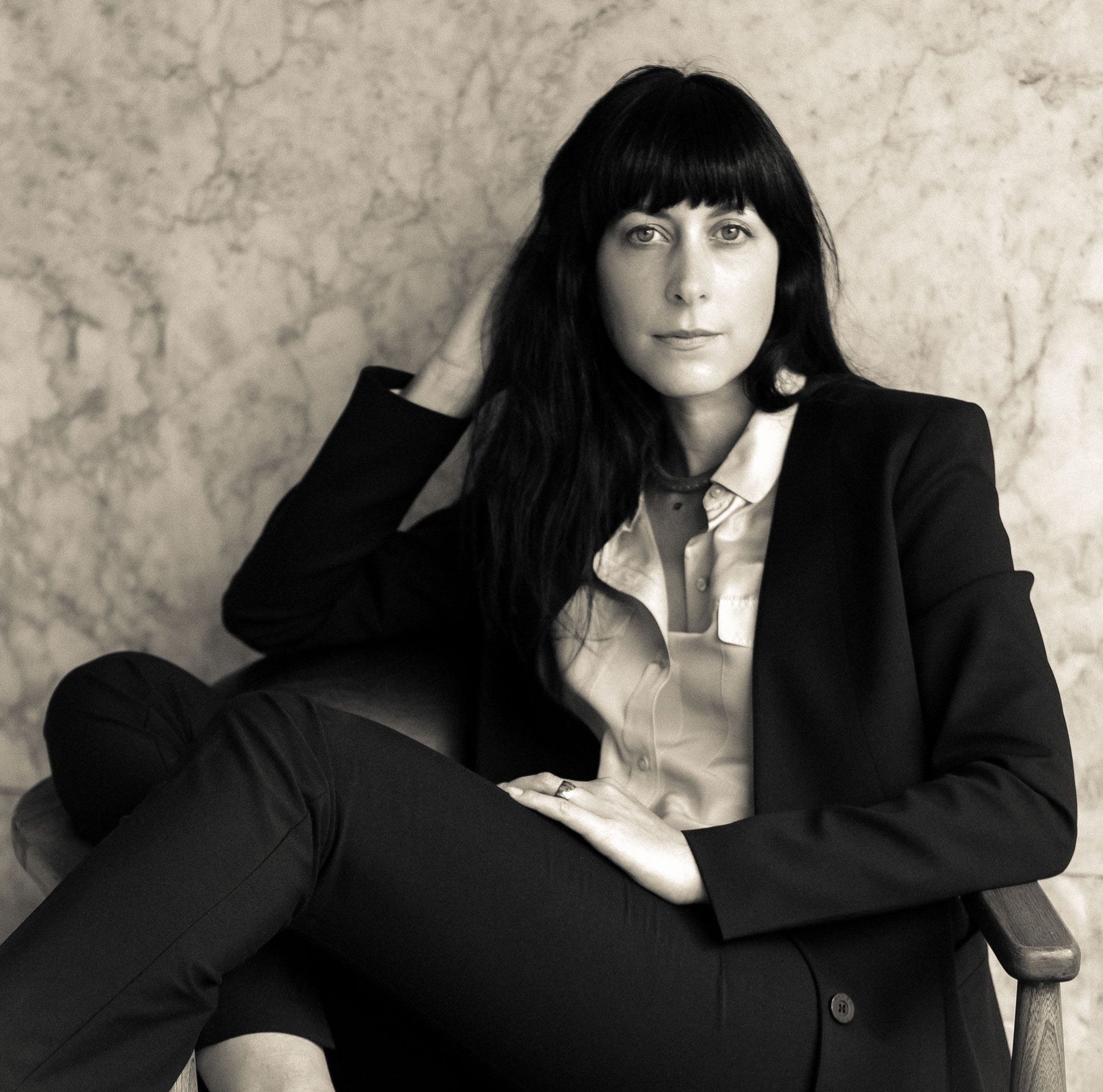
“The human thing that AI will never replace is the discernment it takes to edit, to decide what’s meaningful and worth keeping. When everyone has access to the same AI tools, what differentiates the gold from the slop over time is taste.” - Heather D’Angelo
I posted a note this weekend about getting married 6 months ago. The morning I was getting ready to head to City Hall was great…until it wasn’t. My makeup artist cancelled on me (lol disaster) and I had no time to pull together a plan B, so I did my makeup myself. On my way out the door, I dabbed my wrists with a scent from Carta. I was anything but calm, cool, and collected. I was frantic, flustered, annoyed. Picture me in the back of an Uber SUV practicing deep “woosahs”, praying, hoping somehow that I could stop concentrating on the very basic makeup job I had to do on myself.
Anywho, I didn't know it at the time but a little piece of the Dalmation Coast was sitting right on my wrists. The scent chilled me out.
I texted the photographer to not do any extreme closeups of my face, threw on my sunglasses, and the day went on without anymore glitches.
Looking back, I have Heather D’Angelo to thank for that little zen moment. The perfume I wore was a gift from her. Carta is her company, a perfume brand she runs while also leading brand and communications for a company in the AI space.
And, there's so much more to her story.
FROM INDIE BAND TO HEAD OF BRAND & COMMS
What exactly is a “non-linear career path”?
A lot of my clients come to me with zig zag career paths, trying to fit the pieces together but not sure it all makes sense. When this happens we try to identify themes and transferable skills. One of my clients calls this portability — the idea that your most marketable skills travel with you through every role, every industry, every pivot not just your job titles or scope. It's the underlying way you think, lead, communicate, and operate. I remember having a similar conversation with Heather about her career when we started working together last year. Her career has lots of twists and turns and there’s not one wasted chapter in her story. Let’s start at the beginning.
She went to Parsons, then cofounded an indie band named Au Revoir Simone. They released four albums, toured the world, and ended up on Twin Peaks because David Lynch liked their music. Casual.
Then she was ready for a change. She decided to go back to school to study tropical ecology at Columbia where she did fieldwork in Indonesian Borneo. During one of our coaching sessions, she casually mentioned that Neil DeGrasse Tyson chose her to work closely with him. No big deal! For some people, their career highlights would stop there, but not Heather.
She started a fragrance company built around an essential oil that had never been used in perfume, sourced from a conservation NGO in the Peruvian Amazon. That perfume was featured in Vogue, Vanity Fair, Forbes, and the Coveteur (to name a few). Now she's at Unlearn, running brand and communications for a company building AI for clinical trials.
Heather is a true artist and creative, and she’s also someone wholeheartedly commits to her craft. So much so, that she becomes excellent at everything she decides to do.
Heather and I have been sliding into each other's DMs for months — sharing articles, our hot takes, and things that made us nervous or excited about AI. I love her insights, so I wanted to bring the convo to Reframed. Here’s some fresh perspectives on AI from one of the coolest people I know.
A Q&A on Careers & AI with Heather D’Angelo
I spoke to Heather about how the AI space has shifted, what to do if you feel left behind, and what AI is good and bad at. Here’s what she shared with me.
I was curious to hear more about the AI whiplash we’re experiencing now, going from a world where the general public had no idea what AI was a few years ago to today where it feels like AI is in every headline. Here's what she said.
My first intro to AI came years before it was something people talked about every day, when I was the comms director at an ecology research center at Arizona State University. Much of my job entailed writing about how researchers used early ML to derive patterns from very large ecological datasets. Back then, I wrote under the assumption that my audience likely had no idea what machine learning was so I kept it high-level and focused on communicating the impact of the work.
But then four years ago, I started working at an AI startup in healthcare, and I had to start talking about the models themselves and thinking more deeply about how to do that to a general audience, especially one that had either never heard of AI, or had and were skeptical that it could be helpful in my highly-regulated industry. Even an early as three years ago, it was an uphill battle for comprehension. What’s changed most dramatically is that people now have firsthand experience with it from tools like ChatGPT. I feel like the conversation has shifted almost overnight (hence the whiplash). I now spend less time writing about AI from a defensive standpoint. Our customers are asking more practical questions, generally less dismissive/more curious because they’ve interacted with the technology themselves.
I feel like all we hear about is AI is coming to take everyone’s jobs and if you aren’t using it, your career is at risk. We’ve seen the impact on new grads and how much hiring has slowed for senior leaders. That’s scary. So I asked Heather about what to do if you feel behind.
I think what might feel overwhelming to people who feel behind is that they somehow need to “learn AI,” when the best way to learn is through use. Just pick a model (my favorite service these days is Perplexity) and leverage it like a thinking partner. You’ll start to develop a sense of what it’s good at, where it’s unreliable, and how to direct it.
There’s also just a ton of tutorials out there.
This is a great one for Claude Cowork:

Even though everyone is talking about it, AI use cases still seem pretty ambiguous. I’m always curious to know how and why people use it to streamline their work, so I asked Heather to share some examples of how she’s using it as a marketer in a scientific/heavily technical field.
At this stage of my life, I feel like my brain is all RAM and no hard drive. I’m 46, perimenopausal, raising two toddlers, and deep in brain fog most days. So I’ve started using LLMs as a kind of external hard drive for my work. I upload many of my most important internal documents into a project space and then use the model to cross-reference them. I write all of our external-facing materials, so I’m responsible for ensuring scientific and technical accuracy. I use LLMs like a searchable database, pointing me directly to the documents where specific facts live.
For example, we recently updated our ML model for Alzheimer’s disease. I needed to write several pieces about the update, and one key question was which clinical endpoints were included in the previous version of the model versus the new one. Instead of manually digging through years of documentation, I was able to quickly surface the exact internal documents where those details were discussed, so I could fact-check my writing.
The other way I use LLMs a lot is to help me break down extremely technical material. We recently developed a new ML model in oncology, and the founders wrote a deep-dive white paper explaining the science behind it. To be honest, the first time I read it felt like reading Greek. But Gemini walked me through the concepts step by step. That allowed me to come back to our founders with much more informed questions when it came time to write external-facing materials.
What’s interesting (and a little sad) is that before LLM tools, I would just Slack our scientists and schedule interviews with them, and to be honest, that’s still my favorite part of the job. It’s the reason I wanted to go into science communication in the first place. I love talking to scientists and learning about what they’re working on.But now that I’m at a startup, I’m much more protective of our scientists’ time. Everyone is incredibly busy. Using an LLM lets me do a lot of my homework before I ask them questions, so the conversations are much more focused and productive, and I think they appreciate that.
There are so many hot takes out there about what AI is good at. I was particularly interested in Heather’s perspective as an artist. Bridging creative and technical worlds gives her a pretty unique POV on where the technology shines and where it still has significant gaps. Here’s what she thinks AI is genuinely good at and where it sucks.
AI is genuinely excellent at synthesis. If you give it a body of information/data and ask it to identify patterns, summarize themes, or explain something at different levels of complexity, it’s incredibly powerful. But it sucks at discernment and taste. For instance, I’ve experimented a bit with making music with AI, and I was blown away by the seemingly endless variations it could generate that all sound stylistically correct, but (in my opinion) are emotionally vacant. I’ve heard there are some AI-generated “musicians” topping Spotify’s charts, so I think there’s obviously an audience for anything. But for me, the human thing that AI will never replace is the discernment it takes to edit, to decide what’s meaningful and worth keeping. When everyone has access to the same AI tools, what differentiates the gold from the slop over time is taste. That gives me faith in humanity during this AI-fueled existential crisis.
I agree we have to lean into our humanity:

The one thing I really wanted to know and, honestly the thing most people are losing sleep over is: “Is AI coming for all our jobs?”
There’s a lot of anxiety in the public conversation right now about AI replacing humans, and I understand why. Some of the projections about job disruption are pretty dramatic. At the same time, I’m aware that I may also be a little bit inside the bubble because I work with these tools every day. Personally, I don’t feel like AI is about to replace me. Those might be famous last words, I really don’t know! But using these systems regularly, I’ve seen both their strengths and their limitations. They’re incredibly powerful in certain ways, but they still depend heavily on human judgment and context. So my instinct right now is cautiously optimistic? I think we’re going to need humans in the loop for a long time, especially in work that requires interpretation, communication, and judgment. As this technology continues to evolve, I’m sure my perspective will keep evolving with it.
CLOSING THOUGHTS
Heather’s takes made me feel more solid in my own POV on AI that I hadn’t shared here in a while. The most portable career asset you have right now is judgment. It’s the ability to walk into any room, assess what’s happening, and know what needs to be said or done next. That’s not yet something AI can replicate. It’s all you.
AI can synthesize. It can surface patterns from mountains of data faster than any of us but it can’t decide what matters.
Your judgment is portable. Protect it. Develop it. Lead with it.
If you’re considering a career change and need help weaving together the pieces of your own journey, let me know how I can help.
Good luck. See you next week!
Ashley
One more thing, subscribe to Reframed.
Join readers from Netflix, Google, Uber, Chanel, LinkedIn, and Sephora. I share fresh leadership and career insights every Monday, right before you tackle the rest of your week.
I looking at this and thinking, wait, I know that face ...
Right! Au Revoir Simone!
Cool that she is doing new things.
Thanks for introducing Heather to us, this was a very inspiring conversation!